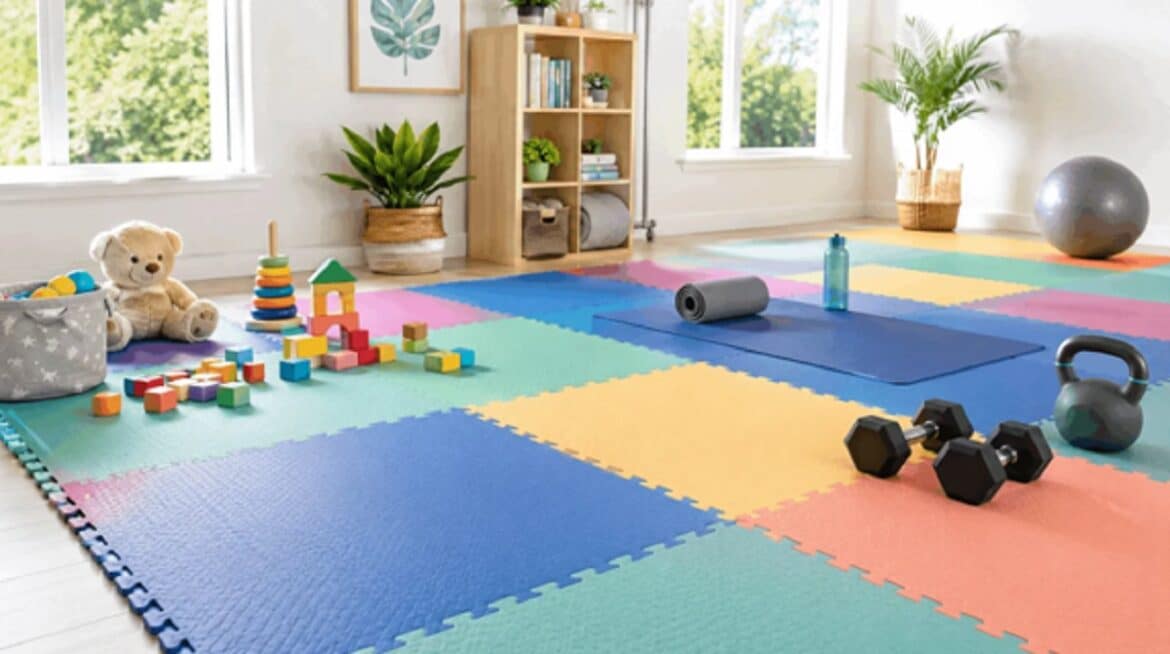
The surface of the floor may influence the comfort and usability of an activity space. Hard floors can be suitable for many uses, but for exercising, playing, stretching or using the floor for activities, extra padding may be needed. This is where EVA foam mats can come in handy. They offer a more comfortable surface without having to replace the entire floor. Knowledge of their content, applications, upkeep and restrictions will enable you to determine if they are appropriate for your specific environment.
Understanding EVA Foam Mats
EVA is a lightweight foam material which is widely used in cushioning and protective surfaces. EVA foam mats are intended to provide a more comfortable area between the floor below and the people on top. They can be used in activities that involve being seated, kneeling, stretching or exercising for long periods of time.
One helpful attribute they have is their relatively low weight. When a room serves more than one function, individual pieces may be moved around, rearranged or stored. This makes them a good choice for home exercise rooms, kids’ rooms, studios and temporary activity areas.
Foam products vary greatly, however, in thickness, density, surface finish and construction. These are important factors to take into account, not just to choose a mat for looks.
Match the Mat to the Activity
The intended activity should be one of the first things you consider. A surface for gentle stretching has different requirements from an area used for energetic children’s play or regular exercise.
Cushioning and comfort may be important for floor-based activities. The feel of the surface is important because users can be sitting, kneeling or lying for long periods of time. Mats for activities that involve a lot of movement can also need to be stable and connected when in use.
When planning the movement of people across the area, it is helpful to consider how they will actually move. This will help you to understand the kind of surface you’ll need.
Check the Existing Floor
The performance of mats may be affected by the condition of the floor underneath. Mats are usually placed on a surface that is clean, fairly flat and free of loose debris.
Dust and small particles can impact the way mats fit to the floor, and moisture can cause maintenance issues. If there are large areas of irregular topography on the existing surface, covering with foam may not be sufficient to address the issue.
Prepare the area before installation. A clean and appropriate base can create a more comfortable and easier-to-clean activity space.
Consider Thickness and Surface Feel
Another factor to consider is thickness, but thick isn’t necessarily good. Depending on the intended use and the desired degree of cushioning, the appropriate thickness is used.
The softness can be nice for stretching and floor movements, but too soft might not feel as stable for some movements. Regular pressure will also be affected by density, as well.
Think about how comfortable, stable and useful it is for your everyday life rather than just one specification.
Think About Cleaning and Maintenance
Activity spaces are subject to dust, sweat, hair and all sorts of other normal dirt. Therefore, maintenance should be taken into account prior to using Foam Mats regularly.
Check for areas that can be cleaned as per the manufacturer’s guidelines. Don’t assume that all cleaning chemicals are appropriate for use on foam materials. The moisture level should also be maintained in excess, particularly in closed spaces where mats are installed.
Cleaning on a regular basis can help maintain a nice environment and provide a chance to inspect the edges, surfaces, and parts for damage, worn surfaces, and improper fit.
Plan for Storage and Movement
Portability can be an important advantage when the same room serves several purposes. Mats can potentially be removed after an activity and stored until they are needed again.
Before choosing a particular design, consider where the mats will be kept. A suitable storage area should protect them from unnecessary moisture, dirt, and damage. If several pieces are being used together, keeping them organised can also make setup faster.
This is especially useful for multipurpose rooms where permanent flooring may not be practical.
Make a Practical Selection
The right mat should be appropriate for the people, activities, floor and maintenance of the space. EVA foam mats can be beneficial when cushioning, portability and comfort are key requirements.
Before buying, consider material, size, thickness, design, and how it will be installed, as well as how it will be used. With a bit of planning, you can pick a solution that is appropriate for the space you have rather than just the one that’s most obvious.
Conclusion
EVA foam mats make any room feel much better to move around in when you pick the right match for your task. Whether setting up a home gym or a soft play zone for kids, your mat needs to give real support while still being easy to wipe down, shift, and stash away. Thinking through your subfloor, daily use, pad depth, and care routines will help narrow things down quickly. If you want to check out practical flooring choices for your project, browsing pvcfloortile.co.za gives you solid options to see before you order.